
| Item | Value |
|---|---|
| Product | Cold-drawn / hot-rolled seamless carbon steel boiler tube |
| Standard & grade | DIN 17175 ST35.8, condition I or III accepted — equivalent designations named by the buyer: EN 10216-2 P235GH, ASTM A179, ASTM A192 |
| Sizes | 44.5 mm OD × 3.20 mm WT · 60.3 mm OD × 3.2 mm WT |
| Length | 12 m, single-length mill supply |
| Total quantity | 6,561 joints / 305.682 t, in three lots (93.179 t + 26.144 t + 186.359 t) |
| Unit weight | ≈39.1 kg/m-joint (44.5) · ≈54.1 kg per 12 m joint (60.3) — calculated, matches order tonnage |
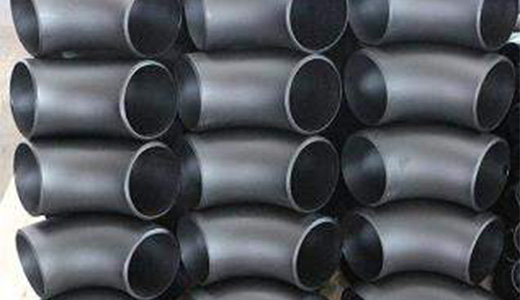
| Surface | Black varnish / rust-preventive paint, plain ends, plastic protective caps both ends |
| Testing | Mandatory: hydrostatic + NDT (UT or ECT) + flattening / expanding tests, per lot and per pipe |
| Marking | Stenciled on every tube: standard, grade, size, heat number |
| Service | Heat transfer of pressurized fluid at up to about 450 °C |
| Destination | Vietnam |
| Shipment | Final lot shipped September 30, 2026 |
The order quantities below are reproduced from the customer's schedule; the three lots correspond to three production phases.
| Lot | Size (OD × WT) | Length | Quantity | Tonnage |
|---|---|---|---|---|
| Lot 1 | 44.5 × 3.20 mm | 12,000 mm | 1,000 pcs | 39.109 t |
| 60.3 × 3.2 mm | 12,000 mm | 1,000 pcs | 54.071 t | |
| Lot 1 subtotal | 93.179 t | |||
| Lot 2 | 44.5 × 3.20 mm | 12,000 mm | 280 pcs | 10.950 t |
| 60.3 × 3.2 mm | 12,000 mm | 281 pcs | 15.194 t | |
| Lot 2 subtotal | 26.144 t | |||
| Lot 3 | 44.5 × 3.20 mm | 12,000 mm | 2,000 pcs | 78.218 t |
| 60.3 × 3.2 mm | 12,000 mm | 2,000 pcs | 108.141 t | |
| Lot 3 subtotal | 186.359 t | |||
| Total | 305.682 t · 6,561 joints | |||
ST35.8 is the DIN 17175 designation for a non-alloy carbon steel tube for elevated-temperature pressure service, and the grade carries a delivery condition in its order line: condition I is hot-finished as-rolled, condition III is normalized. This order accepted either. Normalized (III) gives a uniform grain structure through the wall and is the condition most often chosen for boiler service; hot-finished as-rolled (I) is the economical route where the fabrication code allows it. Both are supplied hot-rolled or cold-drawn — cold-drawn being the choice when tolerance and surface finish matter most, which at 3.2 mm wall they do.
Under the EN system the same grade lives on as P235GH in EN 10216-2 — minimum yield 235 MPa, tensile roughly 360–480 MPa. The purchase order itself names the equivalence: EN 10216-2 P235GH / ASTM A179 / ASTM A192. That is the accepted trade cross-reference; in strict terms the two ASTM grades set a minimum tensile around 325 MPa against ST35.8's 360–480 MPa window, so the mill certificate states the ordered standard, and a designer substituting grades confirms which code governs rather than reading across a conversion table.
Buyer's operating condition, quoted from the order: “these tubes are used for heat transfer of pressurized fluid at working temperatures up to about 450 °C.”
About 450 °C is the top of the carbon steel range. The material ladder above it is the standard escalation of boiler practice: P235GH / ST35.8 → 16Mo3 → 13CrMo4-5 → 10CrMo9-10, each step trading carbon steel for molybdenum and chromium for creep strength. Staying on the lowest grade the design allows is how fabricators control cost — and it is also why a quotation for this grade should be rejected if the seller cannot confirm the grade's temperature basis on the MTC.
The buyer's order text set the inspection requirement directly:
“Given that the tubes are for boiler service, please confirm the manufacturer has carried out the following tests: hydrostatic testing — to verify pressure resistance and tightness; non-destructive testing — ultrasonic testing (UT) or eddy current testing (ECT); mechanical tests — flattening and expanding tests, to verify ductility and crack resistance during welding, tube expansion or forming operations.”
Boiler tube standards generally let the manufacturer prove tightness by hydrostatic test or an equivalent NDT method — one or the other. This order made both mandatory, and named the NDT options:
| Test | Scope on this order | What it proves |
|---|---|---|
| Hydrostatic test | Every pipe | Pressure resistance and tightness under internal pressure |
| NDT — ultrasonic (UT) or eddy current (ECT) | Full length, every pipe | Laminations and internal or near-surface imperfections the surface cannot show |
| Flattening / expanding test | Per lot | Ductility and crack resistance during welding, tube expansion into tube sheets, and forming |
| Dimensional check | Per pipe, vernier caliper and wall-thickness gauge | OD and wall within DIN 17175 tolerances |
On UT versus ECT: ultrasonic examination probes the wall volumetrically and is the stronger tool for laminations and wall-thickness variation, while eddy current testing scans the full length quickly and is most sensitive to surface and near-surface defects — the geometry that matters on thin-wall small-OD tube. The order accepts either, executed over the full length of every joint, and the method used appears in the certificate line for each lot.
Specifying both hydro and NDT removes the manufacturer's option to take the cheaper route — a small line in the PO that changes the cost of the tube. The flattening and expanding requirement is the one most often left out of trading-company quotations, and it is the test that matters for this application: these tubes end up rolled into tube sheets and welded into headers, and the material must deform during those operations without cracking.
Packaging, Coating and MarkingEffectively yes. DIN 17175 St 35.8 was carried into the EN standard system as EN 10216-2 P235GH — the same non-alloy carbon steel for elevated-temperature pressure service, with a minimum yield strength of 235 MPa and tensile range around 360–480 MPa. Certificates for new orders are normally issued to EN 10216-2 with the DIN designation noted as the superseded reference.
The purchase order names EN 10216-2 P235GH, ASTM A179 and ASTM A192 as the equivalent designations — the accepted trade cross-reference for ST35.8. In strict terms the ASTM grades specify a minimum tensile of about 325 MPa against ST35.8's 360–480 MPa window, so the mill certificate states the ordered standard, and a designer confirming any substitution checks which code governs rather than reading across a conversion table.
Standards for boiler tube typically allow the manufacturer to prove tightness by hydrostatic testing or an equivalent non-destructive method — one or the other. This buyer made both mandatory and named the NDT options: ultrasonic testing (UT) or eddy current testing (ECT). Every joint was hydrostatically tested and NDT-verified over its full length, which is stricter than the standard minimum and removes the manufacturer's option to take the cheaper route.
Black varnish or rust-preventive paint is a transport-grade coating that protects the tube surface during ocean freight and yard storage; it is not a service coating for buried lines. Plastic caps on both ends protect the bore, which on small-OD boiler tube is the surface that matters most — internal rust or debris at this diameter is difficult to clean on site.
About 450 °C sits at the top of the carbon steel boiler tube range. Below it, non-alloy grades like ST35.8 are the economical choice. As design temperatures rise, the material ladder moves to 16Mo3, then 13CrMo4-5, then 10CrMo9-10 — each step adds alloy content for creep strength. Choosing the lowest grade the design allows is how boiler fabricators keep cost under control.
This order supplied single 12 m mill lengths rather than 6 m stock lengths. For a fabricator cutting tubes to drawing, longer mill lengths give better cutting yield and fewer joints in each finished coil or bundle, at the cost of stricter straightness handling in transport — 12 m small-OD tube ships in crates, not bundles.
DIN 17175 grades are ordered under delivery conditions: condition I is hot-finished as-rolled, condition III is normalized. This order accepted either. Normalized (III) gives a uniform grain structure through the wall and is the condition most often chosen for boiler service, while hot-finished as-rolled (I) is the economical route where the fabrication code allows it.


.jpg)