
Several Colombian fields produce with hydrogen sulphide present, and that single fact changes what a line pipe order has to be. Where H2S is in the specification, API 5L PSL1 is no longer sufficient: the buyer normally moves to PSL2 for guaranteed toughness, tighter chemistry and mandatory weld-seam examination, and adds resistance requirements along the lines of NACE MR0175 / ISO 15156, with HIC testing to TM0284 and sulphide stress cracking testing to TM0177 where the design calls for them.
The practical point we walked through with the delegation: these requirements have to be named in the purchase order. A PSL2 pipe with impact testing is not automatically a sour-service pipe, and once the steel is rolled, testing cannot be added retroactively. Settling PSL level, impact test temperature and any HIC requirement before the order is placed costs nothing; discovering the gap after delivery costs a project.
The second half of the visit dealt with paperwork, which on Colombian shipments carries as much weight as the steel. The delegation reviewed a sample document set — EN 10204 3.1 and 3.2 certificates, packing list, marking scheme per API 5L including grade, size and heat number on every joint — and we agreed how third-party witnessing would be scheduled at Tianjin when the buyer nominates an inspection agency, so the inspector's visit falls on the actual production date rather than after the pipe is already packed.
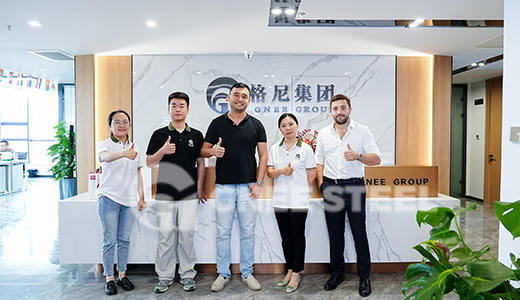
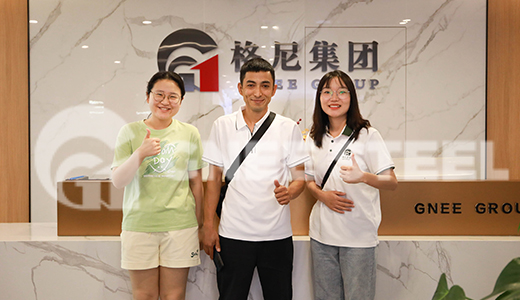
The delegation left with a clear picture of what GNEE can produce, how it is verified, and how a Colombian order moves from purchase order to port. A follow-up technical meeting on their pipeline requirement is already scheduled, and quotations for the sizes under discussion are being prepared against the specification points raised during the visit.
GNEE has served more than 160 customers worldwide across oil and gas, water transmission, construction and industrial applications. We welcome customers and their inspectors to visit our Tianjin facility at any time — the door tends to open onto the stock area first.