API SPEC 5CT is a technical specification standard for oil casing issued by the American Petroleum Institute (API), mainly used in the oil and gas extraction field. This standard specifies the steel grade system, chemical composition, mechanical properties, dimensional tolerances, and other technical indicators for casing and tubing [1-2]. The standard covers more than ten steel grades, including H40, J55, N80, and P110, and sets strict limits on the content of elements such as carbon, manganese, and phosphorus, and sets specific requirements for mechanical properties such as tensile strength (≥517-965MPa) and yield strength (379-965MPa).
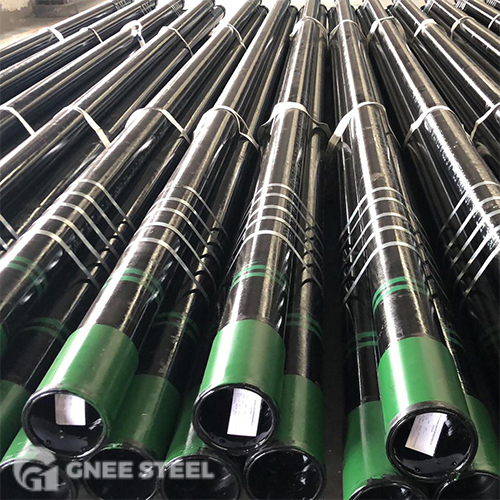
The API 5CT standard imposes very strict requirements on the material of steel pipes. Different steel grades and application environments necessitate different material selections. Common steel grades include:
H40: Suitable for general environments, possessing basic tensile strength and corrosion resistance.
J55, K55: Suitable for environments requiring medium strength, commonly used for casing in oil wells.
N80, R95: Suitable for environments requiring higher strength, commonly used for deeper oil and gas extraction.
L80, P110: Suitable for extreme environments. L80 steel grade is commonly used for deep well extraction, while P110 steel grade is used for high-pressure environments.
Steel pipes of each steel grade must undergo rigorous material testing to ensure their stability and reliability under conditions such as high temperature, high pressure, and corrosive environments.




(1).jpg)
.jpg)